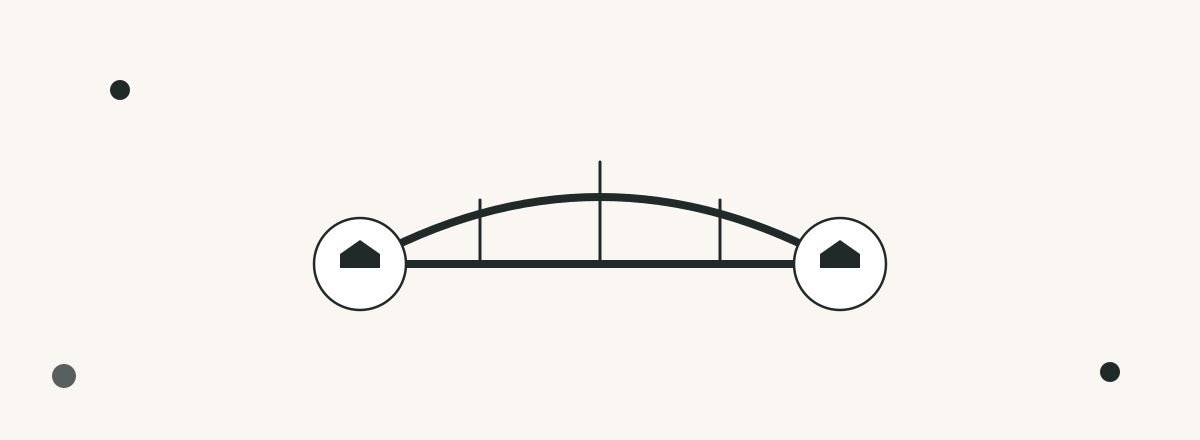
Moving has a chicken-and-egg problem: the down payment for your next home is locked up as equity in the home you haven't sold yet. A bridge loan is one way to break that loop.
What a bridge loan is
A bridge loan is short-term financing that bridges the gap between buying your next home and selling your current one. In plain terms: it lets you buy before you sell.
Buying before you sell
Here's the bind it solves. You've found the new place, but your cash is tied up as equity in your current home — and you may need that equity for the down payment, or you simply can't carry two mortgages at once. A bridge loan unlocks that equity (or funds the new purchase) on a short-term basis, so you can move — often without a sale contingency, which makes your offer stronger to a seller.
How it works
A bridge loan is usually secured by your current home, the new one, or both, and it runs short — often around 6 to 12 months. You put the proceeds toward the new home's down payment or purchase; when your old home sells, you pay the bridge off. Many are interest-only or defer payments during the term. Structures differ: some pay off your old mortgage and hand you the leftover equity, while others sit as a second loan behind it.
Costs and risks
Bridge loans cost more than a standard mortgage — higher rates plus fees — and they carry a specific risk: if your old home doesn't sell in time, you're left holding the bridge loan and possibly two housing payments, which gets expensive fast. You're essentially betting on a timely sale, and you'll need enough equity and the ability to qualify.
It's worth weighing the alternatives first. A HELOC on your current home, a sale-contingent offer, or one of the newer "buy before you sell" programs can cover the same gap — sometimes more cheaply.
The takeaway
A bridge loan buys you timing: the ability to purchase your next home before the current one sells, and to make a cleaner offer doing it. The trade-off is cost, and the risk that a slow sale leaves you carrying two loans. Use it when the timing is worth the premium — and go in with a realistic plan for the sale.
Structures, rates, and terms vary widely by lender and program. Confirm the specifics with the lender you're working with.